 9868100045
 9354017198
 anjulegalconcepts@gmail.com

“If you educate a man, you educate an individual. But if you educate a woman, you educate a whole nation.” By: James Emman Kwegyir Aggrey
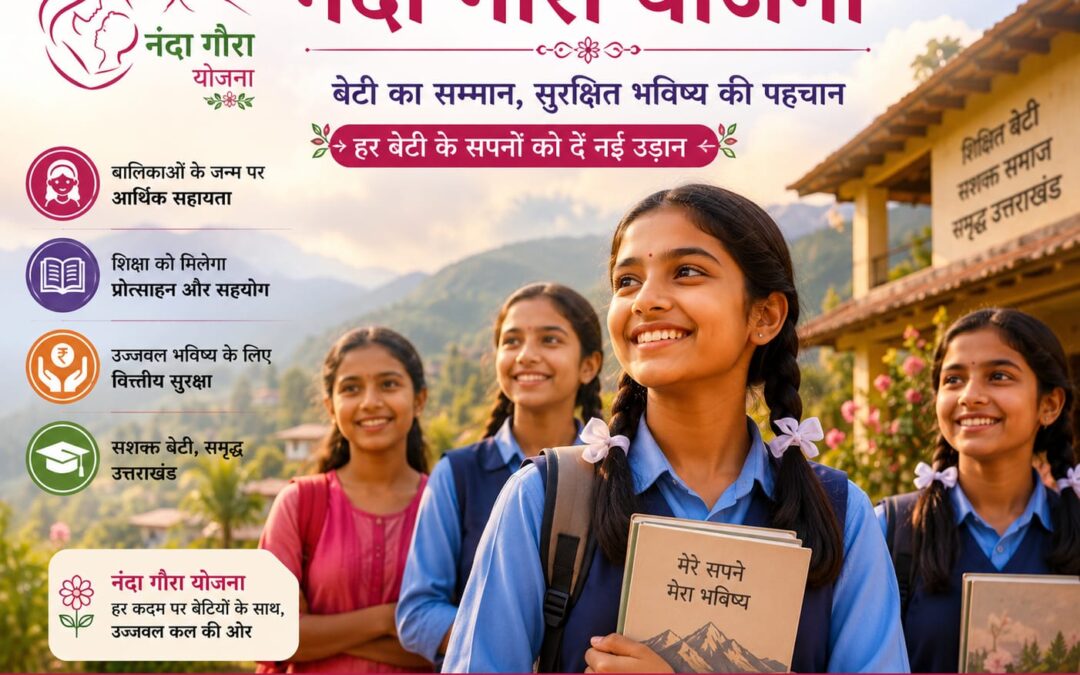
The Government of Uttarakhand introduced the Gaura Devi Kanya Dhan Yojana/Nanda Gaura Yojana with a noble objective to encourage education among girls belonging to economically weaker sections. Under the scheme, unmarried girls who successfully pass Class 12 are entitled to receive financial assistance of Rs. 51,000 which is presently increased upto the amount of Rs. 75,000 under NDY to support their higher education and future aspirations.
The idea behind the scheme is progressive and socially important. In a country where many girls still struggle to continue education due to financial limitations, such welfare schemes are meant to reduce inequality and empower young women. However, the true success of any welfare policy does not depend merely upon its announcement; it depends upon its proper implementation.
If we genuinely want the development of society, then serious attention must be given to girls’ education. Serious focus does not simply mean introducing schemes on paper. It means ensuring their effective and fair implementation at the ground level. Unfortunately, while governments and authorities often work with complete coordination in matters like demolitions, enforcement drives, or revenue recovery, the same seriousness is frequently missing when it comes to distributing welfare benefits to deserving citizens.
The controversy relating to Gaura Devi Kanya Dhan Yojana highlights this unfortunate reality. A large amount was sanctioned by the Government for distribution under the scheme, and benefits were released to several eligible girls across different academic sessions. However, many deserving students were allegedly deprived due to confusion between departments, improper implementation, lack of coordination, and negligence in processing applications. While thousands of girls were expected to receive the benefit, many eligible beneficiaries reportedly remained excluded despite fulfilling the prescribed criteria.
The issue becomes more concerning because such schemes are specifically framed for the upliftment of girls from weaker sections of society. When benefits fail to reach deserving students because of administrative lapses, the very purpose of the welfare policy gets defeated.
Welfare schemes should operate with transparency, accountability, and efficiency. Once a student fulfills all eligibility conditions and submits the required documents, the responsibility lies upon the authorities to process the application properly. Citizens should not suffer because of internal confusion between departments or procedural negligence within the administrative machinery.
This situation reflects a larger issue affecting welfare governance in India. Governments frequently introduce progressive schemes for women empowerment, but implementation at the ground level often remains weak. As a result, beneficiaries are forced to struggle for rights and benefits already promised to them.
Effective implementation of welfare schemes requires accountability, transparency, and coordination. Every application should be digitally tracked, beneficiaries should receive proper acknowledgment and status updates, and departmental responsibility must be clearly fixed so that eligible students are not denied benefits due to internal administrative failures. Welfare schemes should be implemented with the same seriousness with which they are announced.